

PIN AND RETAINER
PIN AND RETAINER are precision-engineered components widely used in mechanical assemblies to ensure accurate positioning, secure fastening, and reliable retention of parts. They play a critical role in maintaining structural integrity and functional stability under various operating conditions, including vibration, shock, and repeated load cycles.A pin is typically a cylindrical metal element designed to align, locate, or lock components together. It is commonly used in housings, gears, shafts, linkages, and structural joints. Depending on the application requirements, pins may be solid or hollow, smooth or grooved, tapered or straight. Common types include dowel pins for precise alignment, spring pins for elastic retention, and taper pins for self-locking assemblies. Materials are often selected based on strength, wear resistance, and environmental conditions, with carbon steel, alloy steel, and stainless steel being frequently used. Heat treatment and surface finishing processes can be applied to improve hardness, corrosion resistance, and durability.A retainer is a device or element designed to hold a pin or other component securely in place, preventing axial movement or accidental disengagement. Retainers are commonly used in conjunction with pins to complete a fastening system. They can take many forms, such as clips, rings, plates, or specially formed features in the surrounding structure. Typical examples include snap rings, circlips, retaining plates, and wire retainers. The design of a retainer must ensure sufficient holding force while allowing for convenient assembly and disassembly when maintenance or replacement is required.In an integrated PIN AND RETAINER system, the pin provides the primary mechanical function—alignment, load transfer, or pivoting—while the retainer ensures that the pin remains correctly positioned throughout the life of the assembly. This combination is particularly valuable in applications where space is limited, where frequent servicing is expected, or where other fastening methods such as threaded fasteners are undesirable due to weight, cost, or complexity.Design considerations for PIN AND RETAINER include dimensional tolerances, assembly clearances, material compatibility, and the anticipated loading conditions. Proper tolerance control is essential to avoid excessive play or interference, both of which can lead to premature wear or failure. In safety-critical applications, such as automotive, aerospace, and heavy machinery, additional factors like fatigue strength, impact resistance, and environmental exposure must be carefully evaluated.Manufacturing of these components typically involves precision machining, cold forming, stamping, or a combination of these processes. Quality control is crucial, with inspections focusing on dimensions, surface finish, hardness, and mechanical performance. When well-designed and correctly applied, PIN AND RETAINER solutions offer a robust, cost-effective, and maintainable method of securing mechanical components in a wide range of industrial and commercial applications.
Products
Category:
-
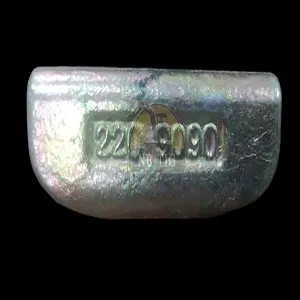
220-9090 CAT K80 K90 K100 K Series Tip Retainer
Category: Locks and PinsBrowse number: 445Number:Release time: 2026-05-27 17:32:20Robust locks and pins are engineered for high-impact operations, ensuring secure mechanical connections under extreme loads, vibrations, and repeated impacts. Made from high-strength alloy steel with precision machining and wear-resistant surface treatments, they provide long-lasting durability, prevent loosening, and maintain equipment stability, supporting safe and reliable industrial performance.
News
Category:
No search results found!
Case
Category:
No search results found!
Video
Category:
No search results found!
Download
Category:
No search results found!
Job
Category:
No search results found!
Featured Products
No search results found!



 Phone